

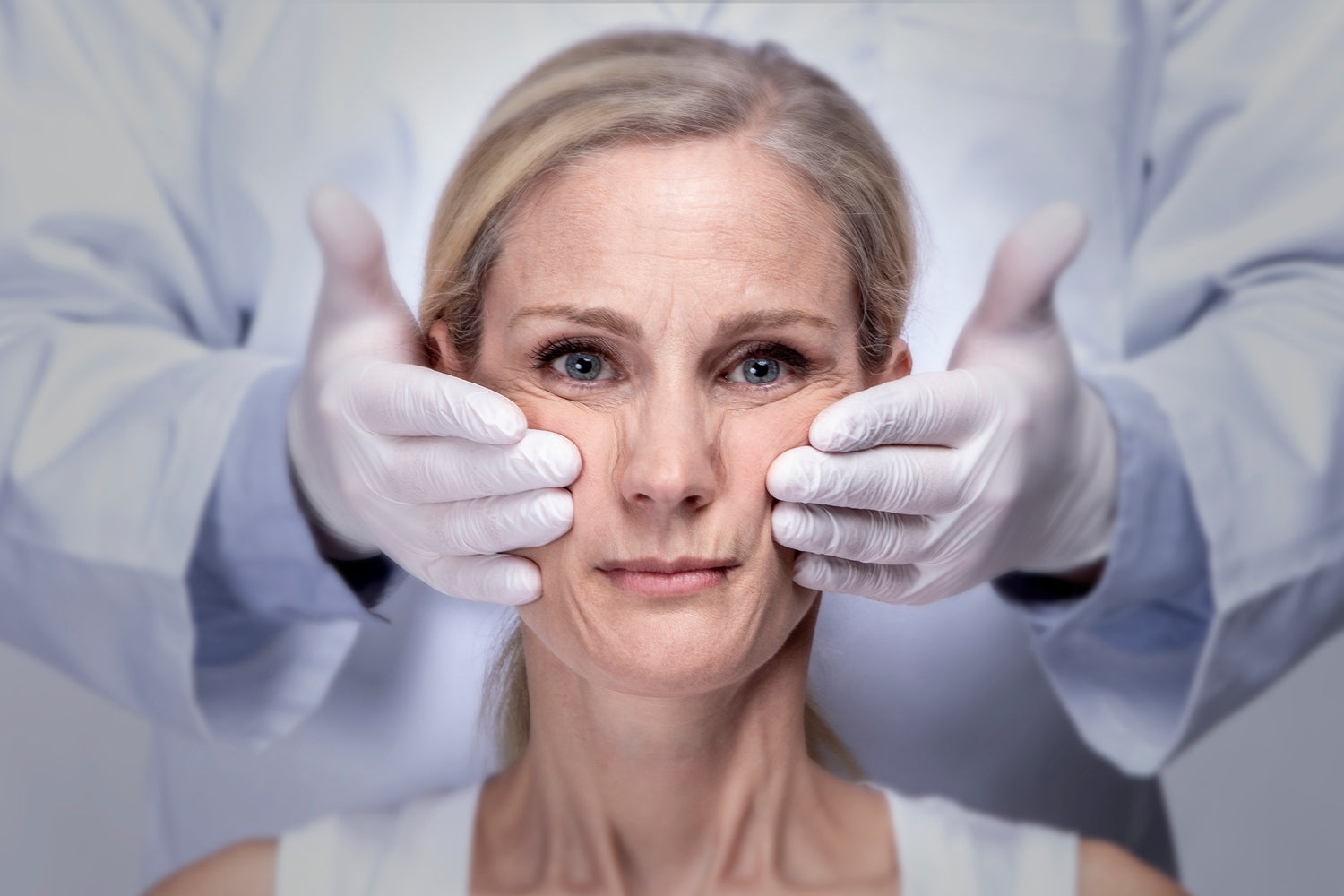
How Can You Prevent Sleep Wrinkles?
Sleep wrinkles are caused by repeated facial compression during sleep. While no solution can completely prevent wrinkles, reducing the pressure, folding, and friction placed on your skin night after night may help minimize their formation over time.
The American Academy of Dermatology notes that years of sleeping with your face pressed against a pillow can contribute to lines that may become more noticeable over time, particularly in side and stomach sleepers.
Most experts agree that reducing repetitive facial compression is one of the most effective ways to help prevent sleep wrinkles. This can be approached in several ways:
"Sleep on your back whenever possible"
"Use a smooth, low-friction pillowcase materials such as silk"
"Support healthy skin hydration and collagen production"
"Choose a pillow designed to minimize facial compression (with proper neck support preferably)"
For many people, the greatest challenge is accomplishing this without sacrificing comfort or proper neck support.
What Causes Sleep Wrinkles?
Sleep wrinkles are mechanical lines caused by repeated facial compression and skin folding against a pillow during sleep. Unlike expression lines, which develop from muscle movement, sleep wrinkles are created by sustained pressure on the skin for hours at a time.
Side and stomach sleepers are most affected. However, changing sleep position isn't realistic for most people. That's why we believe the better solution is changing what your face is pressing against.
As nurses, we designed the enVy® pillow to support proper cervical alignment while helping reduce unnecessary facial compression. The goal isn't to change how you sleep—it's to make your pillow work with your body instead of against it.
``If sleeping with your face in a pillow is a nightly routine, then you can develop permanent sleep lines. And you don't have to plunge headfirst to get these lines; even years spent sleeping on your side can cause wrinkles.``
~ American Academy of Dermatology
Same Person. Same Age. Different Sleep Habits.
Drag the slider to see how repeated nightly facial compression may influence the appearance of sleep lines over time.


Night After Night, Your Pillow Pushes Back
Every night, your face can spend hours compressed against a pillow surface. Over time, that repeated pressure may contribute to the formation and deepening of sleep wrinkles—particularly in side and stomach sleepers.
The goal isn't to stop sleeping on your side. It's to reduce unnecessary facial compression while maintaining proper neck and spinal support.

Why Traditional Pillows Can Create Facial Pressure
While expression wrinkles form through movement, sleep wrinkles are created by mechanical forces acting on the skin for hours at a time. When side sleeping, the weight of the head is concentrated against a relatively small area of the face, creating pressure, compression, and friction night after night.
Traditional pillows are designed primarily to support the head. Few are designed to address what that pressure may be doing to the skin.
What Dermatologists Say About Sleep Wrinkles
Board-certified dermatologist Dr. Julia Carroll explains explains how repeated facial compression during sleep may contribute to the formation of sleep lines over time.

How Side Sleeping Affects Facial Skin
As nurses, we believed people shouldn't have to choose between proper neck support and reducing facial compression.
That's why the patented enVy® pillow was designed to support cervical alignment while helping reduce direct pressure on delicate facial tissues during side sleeping.
Unlike many anti-wrinkle pillows that rely on deep facial cutouts, the enVy® approach focuses on supporting the head and neck in a way that naturally helps keep pressure off key facial areas while maintaining ergonomic support.
The design has been evaluated in published peer-reviewed research co-authored by co-founders Kim Renton RN adn Kathy Young Keefe RN examining facial compression during sleep and remains the foundation of every enVy® pillow we make.
What Makes enVy® Different?
✓ Patented OFF-Your-Face® design
✓ Nurse-designed for cervical alignment
✓ Supported by peer-reviewed research
✓ Designed for natural side and back sleepers
✓ Available with biofunctional silk options that help reduce friction and support a cleaner sleep environment
Frequently Asked Questions About Sleep Wrinkles
Can sleep wrinkles become permanent?
Yes. While temporary sleep lines often fade shortly after waking, repeated facial compression over many years may contribute to deeper lines that become more noticeable over time. As skin loses collagen and elasticity with age, these lines may become slower to rebound.
Are sleep wrinkles different from expression wrinkles?
Yes. Expression wrinkles are caused by repeated muscle movements such as smiling, squinting, and frowning. Sleep wrinkles are caused by repeated facial compression, folding, and pressure against a pillow during sleep.
Does sleeping on your side cause wrinkles?
Side sleeping may contribute to sleep wrinkles because one side of the face experiences sustained pressure against a pillow for several hours each night. However, side sleeping also offers important benefits for many people and is often the most comfortable sleep position. Rather than changing how you sleep, many experts recommend reducing unnecessary facial compression.
Do silk pillowcases prevent wrinkles?
No pillowcase can completely prevent wrinkles. However, silk creates less friction than many traditional fabrics and may help reduce pulling and drag on the skin during sleep. For best results, many people combine a silk pillowcase with a pillow designed to reduce facial compression.
Do anti-wrinkle pillows actually work?
Anti-wrinkle pillows are designed to reduce the amount of pressure placed on the face during sleep. Different designs use different approaches, from facial cutouts to ergonomic shaping. The enVy pillow was developed to help reduce facial compression while also supporting proper cervical alignment for side and back sleepers.
What is pillow face?
"Pillow face" refers to temporary lines, creases, or puffiness that may appear after sleeping with the face pressed against a pillow. While these marks usually fade, repeated compression over many years may contribute to more persistent sleep lines.
What is the best pillow for sleep wrinkles?
The best pillow for sleep wrinkles is one that helps reduce facial compression while still providing proper support for the head, neck, and spine. The patented enVy pillow was designed specifically to address both concerns by combining ergonomic cervical support with an OFF-Your-Face® approach to side and back sleeping.
Can I prevent sleep wrinkles without sleeping on my back?
The enVy® pillow was developed specifically for side and back sleepers who want to reduce facial compression without changing their preferred sleep position. When paired with enVy COPPER-infused silk pillowcases, sleepers benefit from both a mechanical approach (less pressure and friction) and biofunctional support, including copper's well-documented role in collagen and elastin formation.